
Choosing the Right Excavator for Small Building Projects

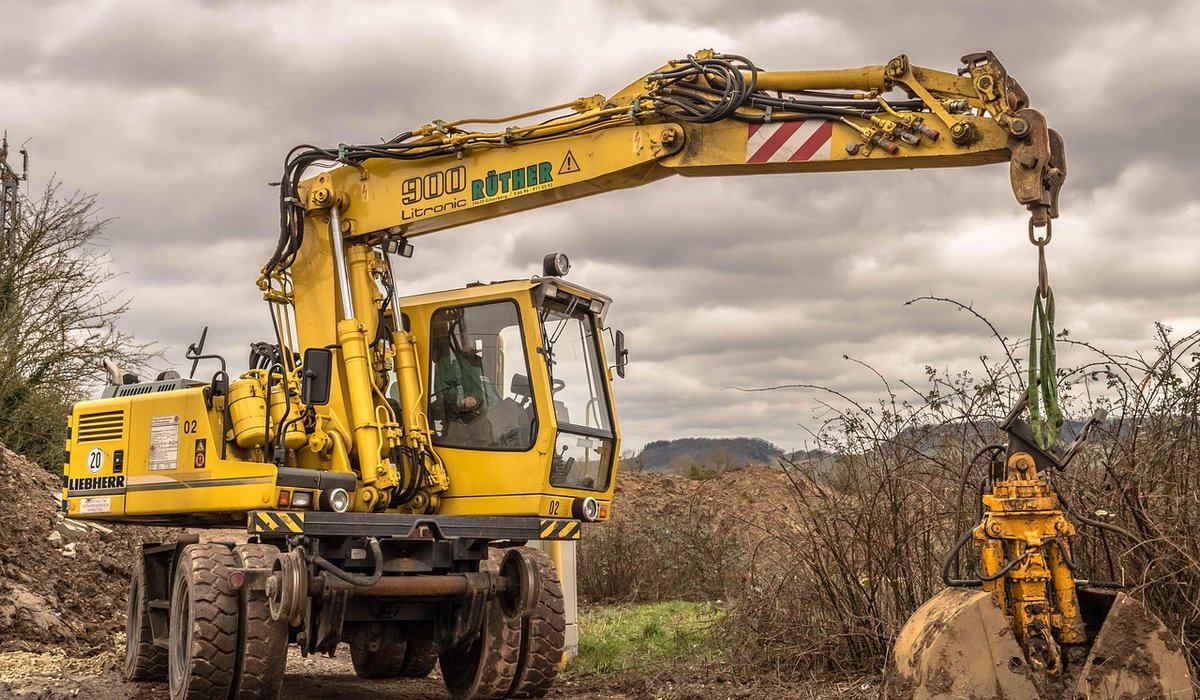
Match the machine to the job, not the other way round
An excavator is usually the first machine onto a small building site and the last one off it. Get the size right and footings, drainage and landscaping flow along nicely. Get it wrong and you either spend three days on a job that should take one, or you stand in the street watching a machine that physically cannot reach the back garden. The trick is to work backwards from the job: how much spoil has to come out, how deep and how far the bucket has to reach, and what the ground underneath will actually carry.
Access is usually the deciding factor
Before comparing specs, walk the route. Measure the narrowest point the machine has to pass, not the widest. On terraced streets that is often a back alley gate, a side return between a house and a boundary wall, or the gap between a conservatory and a fence.
- Micro excavators (around 0.8–1 tonne) are typically 700mm to 1m wide and will squeeze through a standard garden gate. They dig to roughly 1.6–2m and suit patio footings, small soakaways and tight rear gardens.
- Mini excavators (1.5–2.6 tonnes) are the workhorses of domestic work, commonly about 1.5m wide, so a clear 1.6m gap is comfortable. Dig depth is roughly 2.2–2.9m.
- Midi machines (3–5 tonnes) need proper vehicle access and a decent turning area. Expect around 3–4m of dig depth and a real appetite for moving bulk spoil.
- 6–8 tonnes and above suit larger plots, barn conversions and commercial extensions, but ground bearing pressure under the tracks climbs quickly.
Don't forget height. A canopy or ROPS frame adds roughly 2.3–2.5m to a mini, and low garage openings, overhanging branches and washing lines have a habit of appearing at the last minute. Tracked machines cope better with soft ground; wheeled machines travel over tarmac and block paving with less marking but lose grip on wet clay. A few scaffold boards or bog mats will protect a driveway and save an awkward conversation with the customer.
Digging depth, reach and the spoil problem
Depth is the easiest thing to overestimate and the easiest to get wrong. Standard strip footings for a domestic extension are usually 600–1000mm deep, drainage runs sit at 600–1200mm depending on falls and invert levels, and a soakaway crate can easily want 1.5–2m of cover. Add a margin of 300mm so you are not scraping the bucket along the formation you have just trimmed.
Reach matters just as much as depth. You need to place spoil somewhere it will not fall back in, and you need to reach the far side of a trench without tracking over freshly dug ground. As a rule of thumb, a machine works comfortably within about two-thirds of its maximum reach, and digging over the side is always less stable than digging over the front or the back.
Ground conditions and what the machine does to them
Stiff clay, chalk, sandy gravel and made ground all behave differently. A narrow 9-inch trenching bucket cuts cleanly through clay; a wider 12 or 18-inch bucket shifts volume faster but can smear and compact trench sides in wet weather. If you hit old brick footings, a concrete slab or a band of ragstone, you want a machine with enough weight behind it to break the material out rather than one that simply bounces on top of it.
Soft ground is the other half of the story. A heavier machine on wet ground will rut, sink and disturb finished surfaces, so match the machine to what the ground can take. Timber mats, a tracked dumper for moving spoil, and keeping heavy plant at least 1.5 times the trench depth back from the edge are basic precautions that prevent collapses. In very wet conditions, plan for a sump and pump rather than pretending the water will not appear.
Attachments and hydraulics worth having
Most small machines arrive with a quick hitch and a couple of buckets, usually a digging bucket and a grading bucket. If you may need to break out concrete, drill fence post holes with an auger or clear brash with a grab, check whether the machine has auxiliary hydraulic lines and what flow and pressure they deliver. A breaker sized for a 1.5-tonne machine is useless on a 5-tonne host, and the reverse can damage the attachment.
Weigh the attachment as well as the bucket. A heavy breaker or grab hanging off a mini changes the balance noticeably, so reduce reach and take it steadily rather than trying to work at full stretch.
Safety, services and knowing when to call in an operator
Always request up-to-date service plans and use a cable avoidance tool before you break ground, then hand-dig carefully within a metre of anything marked. Keep spoil heaps well back from trench edges, provide barriers and signage, and support or batter any excavation deep enough to trap someone. Spoil itself is heavy, and a heap sitting on the trench edge is a surcharge the ground did not ask for.
Finally, be honest about competence. A mini excavator is easy to hire and surprisingly easy to tip, particularly on a slope or with the boom swung to the side. If the job involves deep trenches, tight boundaries or live services, the cost of an experienced operator with the right card and insurance is usually far cheaper than the alternative. Choose the machine that fits the site, the depth and the ground, and the rest of the job tends to look after itself.

Joeby Ragpa
This template is so awesome. I didn’t expect so many features inside. E-commerce pages are very useful, you can launch your online store in few seconds. I will rate 5 stars.
ReplyAlexander Samokhin
This template is so awesome. I didn’t expect so many features inside. E-commerce pages are very useful, you can launch your online store in few seconds. I will rate 5 stars.
ReplyChris Root
This template is so awesome. I didn’t expect so many features inside. E-commerce pages are very useful, you can launch your online store in few seconds. I will rate 5 stars.
Reply