
Drainage Field Installation for Rural Properties

What a drainage field does for a rural property
If your home isn’t connected to mains sewerage, you’ll rely on a septic tank or a packaged treatment plant. These collect and partially treat wastewater, but the effluent still needs a final soakaway into the ground. That’s where a drainage field comes in. Also called a leach field or soakaway system, it’s a network of perforated pipes laid in gravel-filled trenches. Effluent trickles out, and naturally occurring soil bacteria and physical filtration finish the treatment. Done properly, it’s a low-maintenance, reliable solution. Done badly, you risk pollution, soggy lawns, and a bill that runs into thousands.
Percolation testing: the step you cannot skip
Before any excavation starts, you must find out how quickly your soil absorbs water. This is done with a percolation test, usually following BRE 365 or BS 6297. The test involves digging one or more trial holes to the depth of the proposed trenches, filling them with water, and measuring how quickly the level drops. The result gives you a Vp value – the time in seconds for water to fall 1mm. That number directly determines the size of the drainage field.
Why is this so important? Because soil varies enormously. Sandy loam might drain in minutes, while heavy clay can take hours or even days. If you guess, you could end up with a field that’s too small – effluent ponds on the surface, smells, and a health hazard. Too large, and you’ve wasted money and land. A percolation test is also required for building regulations approval and permitted development. It’s the foundation of the whole design.
Designing the layout and pipe spacing
Once you have your Vp, you can calculate the total trench area needed. As a rough guide, a four-bedroom house with a Vp of 30 might require around 30 square metres of trench bottom. But always check the current regulations and manufacturer’s guidance for your treatment plant. The field itself is made up of trenches, typically 0.6m to 1m deep, filled with clean 20–40mm aggregate. Perforated pipes, usually 100mm diameter, run along the trenches.
Pipe spacing is critical. Too close together, and the effluent doesn’t have enough soil volume to treat properly. Too far apart, and you waste valuable ground. A common spacing is 1.5m to 2m between trench centres. The pipes should have a fall of about 1:200 to ensure even distribution, and each trench should be level along its length. A geotextile membrane over the aggregate stops fine soil particles clogging the system. If the ground slopes, you may need a distribution chamber or shallow contour trenches to keep things even.
Excavation and groundworks practicalities
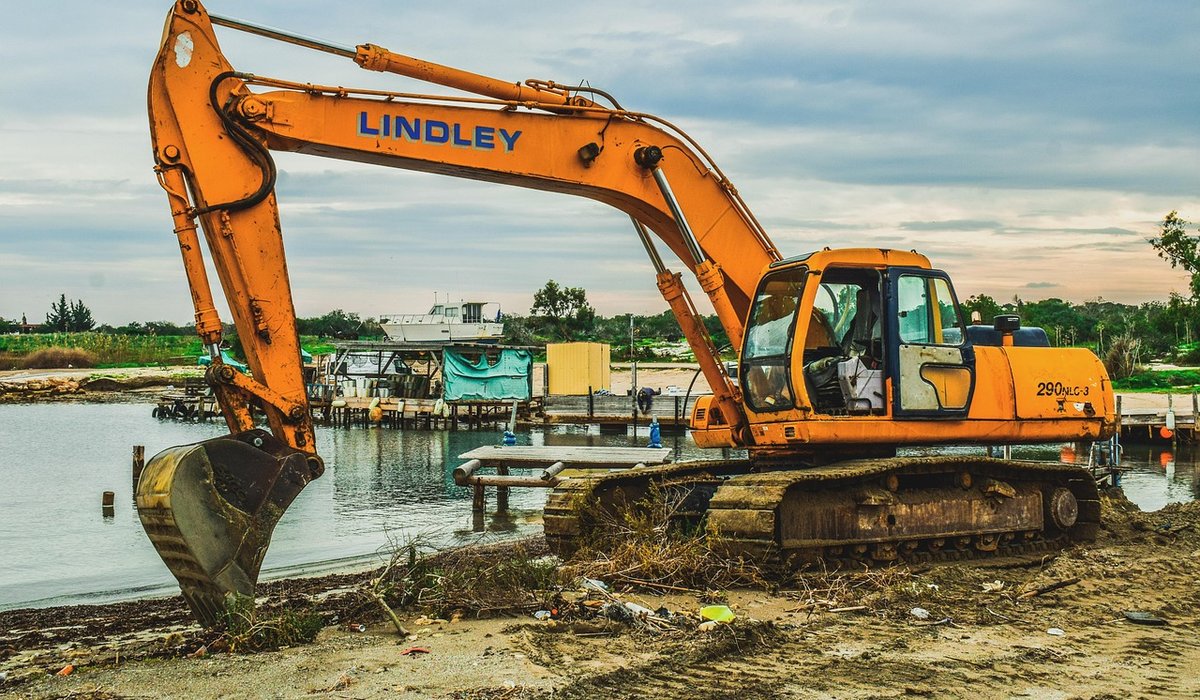
Digging the trenches requires a gentle touch. The base of the trench is the infiltration surface, so you must avoid compacting it. Use a digger with a smooth bucket, and keep machinery off the trench bottom. If the ground is steep, plan for a series of shallow trenches that follow the contour, or install a distribution box to balance flows.
Watch out for the water table. If you hit groundwater or a seasonally high water table, a standard drainage field won’t work – you’ll need an alternative system. Keep the field at least 10m from any watercourse, borehole, or spring, and away from trees and hedges, whose roots can invade pipes. In winter, wet ground makes excavation messy and compaction more likely, so aim for drier months if you can. Also, think about access for future maintenance: leave room for a small excavator or a tanker.
Common mistakes and how to avoid them
- Skipping the percolation test and guessing the size. It’s false economy.
- Wrong pipe spacing – either cramming trenches together or spreading them too far.
- Using the wrong aggregate – fines or crushed limestone can clog; always use clean, washed stone.
- Forgetting the geotextile – soil will wash into the gravel and seal it.
- Compacting the trench base with heavy machinery or foot traffic.
- Ignoring the water table – if the field sits in groundwater, it will fail.
- No room for maintenance – you need access to inspection chambers and the distribution box.
Maintenance and long-term care
A well-installed drainage field should last 20 years or more, but it isn’t entirely hands-off. Have your septic tank or treatment plant emptied regularly by a registered contractor – typically once a year for a septic tank, less often for a treatment plant. Avoid pouring bleach, disinfectants, oils, or paints down the drain, as these kill the bacteria that do the work. Keep vehicles and livestock off the field, and don’t plant trees or shrubs nearby. If you notice slow drainage or odours, check the distribution box first – sometimes a blocked pipe is the only problem. If the field does fail, replacement is disruptive and expensive, which is why getting the percolation test, pipe spacing, and excavation right from the start pays for itself many times over.

Joeby Ragpa
This template is so awesome. I didn’t expect so many features inside. E-commerce pages are very useful, you can launch your online store in few seconds. I will rate 5 stars.
ReplyAlexander Samokhin
This template is so awesome. I didn’t expect so many features inside. E-commerce pages are very useful, you can launch your online store in few seconds. I will rate 5 stars.
ReplyChris Root
This template is so awesome. I didn’t expect so many features inside. E-commerce pages are very useful, you can launch your online store in few seconds. I will rate 5 stars.
Reply